
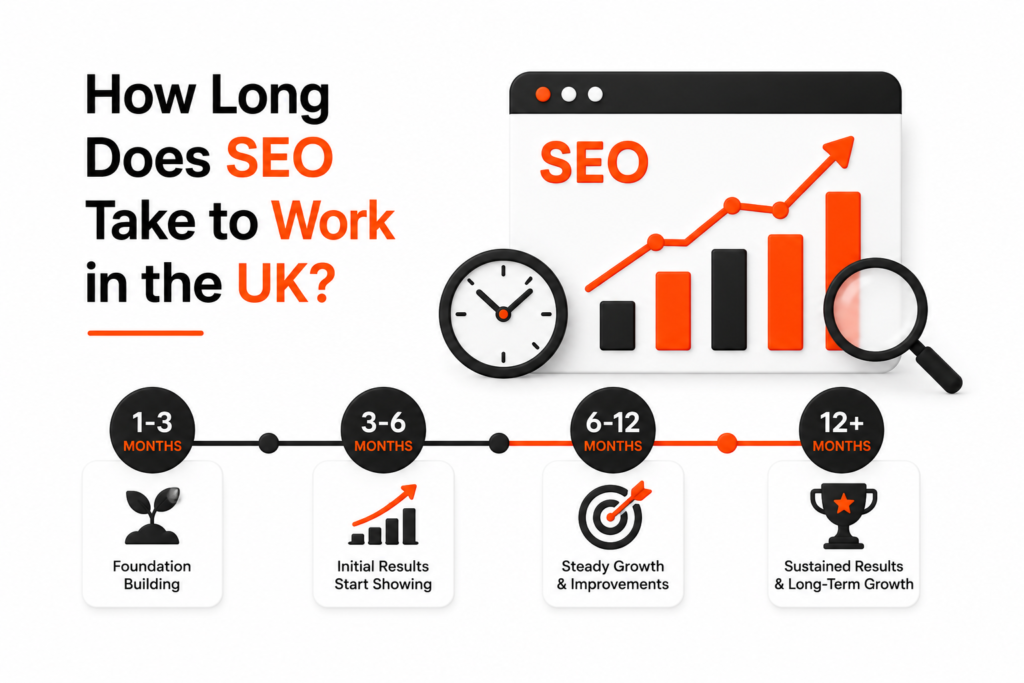
Businesses investing in search marketing often ask how long does SEO take before meaningful improvements appear. Unlike paid advertising, SEO works through gradual optimisation that strengthens visibility, authority, and long-term organic performance rather than producing instant traffic. The time required depends on several variables, including website age, competition level, technical condition, content quality, and the consistency of optimisation efforts. Some websites notice early signals within weeks, but stronger growth typically develops over a longer period.
This guide explains realistic SEO timelines, the factors that influence progress, and what businesses should expect throughout the optimisation process.
What Affects How Long Does SEO Takes to Deliver Results?
The answer to how long does SEO take depends on multiple performance factors rather than a fixed timeframe. Search engines evaluate website quality, authority, relevance, technical health, and competitive positioning before rankings improve consistently. New websites often require more time because they have limited authority and historical performance data. Established websites may progress faster if they already have strong foundations and only need targeted optimisation. Industry competition and content quality also influence results significantly.
Businesses evaluating progress should focus on realistic expectations rather than instant outcomes and understand the typical SEO results timeline that UK businesses experience during sustainable growth campaigns.
How Long Does It Take to Rank on Google in the UK?
When businesses ask how long does SEO take, they are often trying to understand how quickly websites can achieve stronger visibility in search results. Ranking timelines vary because search performance depends on competition, domain authority, content quality, and the effectiveness of optimisation efforts.
For lower-competition terms, websites may begin seeing measurable movement earlier, while competitive industries generally require a more sustained approach. Technical improvements, content publishing, and authority building all contribute to progress over time. Understanding how long to rank on Google UK helps businesses plan budgets and set realistic growth targets rather than expecting immediate ranking changes.
Typical SEO Timeframes Businesses Should Expect
Understanding a realistic how long does SEO take timeline helps businesses measure progress more effectively and avoid unrealistic expectations. SEO performance usually develops in stages rather than through one sudden increase in rankings or traffic.
Early phases often focus on technical improvements, website optimisation, indexing updates, and content adjustments. Mid-stage progress may include ranking movement, stronger visibility, and increased organic engagement. Longer-term campaigns generally concentrate on authority growth and sustainable performance gains. Reviewing the typical SEO timeframe UK businesses experience can help decision-makers evaluate progress using measurable milestones instead of short-term fluctuations.
When Does SEO Start Working and Showing Progress?
A common follow-up to how long does SEO take is understanding when visible improvements usually begin. SEO often starts generating signals before businesses notice major ranking or traffic changes. Search engines may first recognise technical updates, improved content structure, and stronger relevance before these adjustments translate into measurable outcomes.
Progress can appear through increased indexing, improved keyword positioning, better engagement metrics, and gradual organic traffic growth. Results do not always happen at the same pace across every website or industry. Understanding when does SEO start working helps businesses evaluate early indicators instead of relying only on final ranking positions.
Setting Realistic Expectations for SEO Success
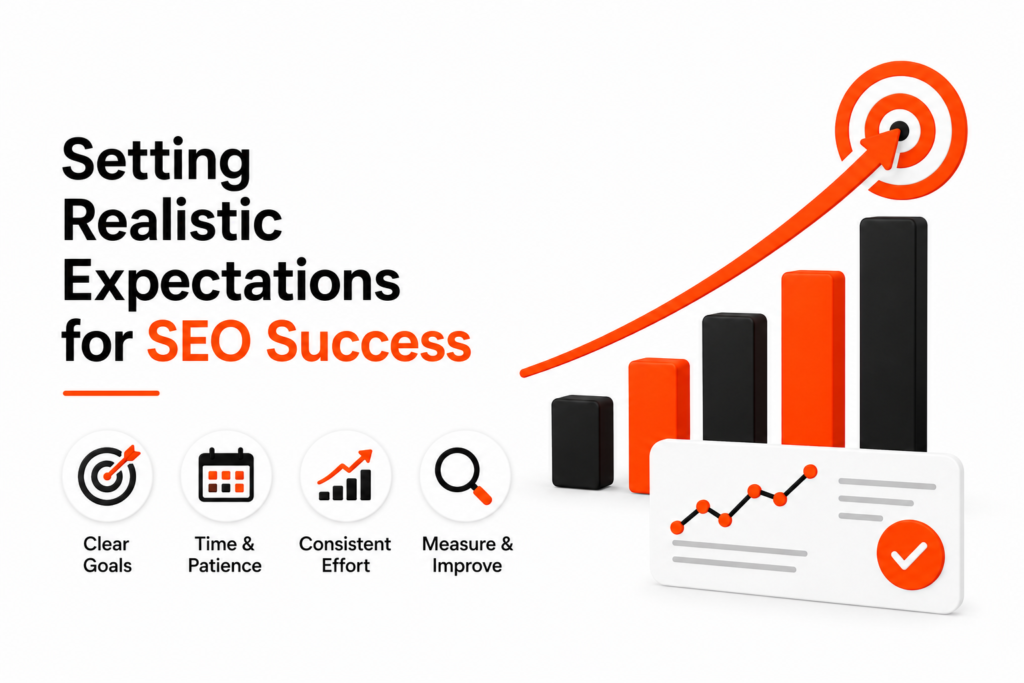
Understanding how long does SEO take requires aligning business goals with realistic performance expectations. SEO is designed to build sustainable visibility and long-term growth, which means results usually develop through continuous optimisation rather than immediate ranking gains. Businesses often make stronger decisions when they track progress using multiple indicators such as visibility improvements, organic traffic quality, keyword movement, and conversion performance. Measuring only rankings can create misleading expectations during early campaign stages.
Developing clear SEO expectations UK businesses can realistically achieve helps maintain consistent strategy execution and supports stronger long-term outcomes from search investment.
How Fast Can SEO Work With the Right Strategy?
Many businesses evaluating how long does SEO take want to know whether results can be accelerated. While SEO cannot be guaranteed on a fixed schedule, strong execution can improve efficiency and reduce delays in performance growth. A well-structured campaign usually combines technical optimisation, targeted content, search intent alignment, and continuous performance monitoring. Website quality, industry competition, and implementation consistency all influence the speed of progress. Sustainable gains generally come from improving overall search signals rather than pursuing shortcuts.
Understanding how fast does SEO work allows businesses to focus on scalable improvements that support long-term search visibility.
Understanding Google Ranking Timelines in the UK
To answer how long does SEO take, businesses should understand that search rankings develop through ongoing evaluation rather than immediate updates. Search engines continuously reassess website relevance, content quality, user signals, and authority before adjusting positions in search results. Ranking changes may occur gradually as pages are crawled, indexed, and compared against competing websites. Consistent optimisation, stronger content quality, and technical improvements often support more stable progress over time. Temporary fluctuations are also common during active campaigns.
Reviewing typical Google ranking time UK patterns helps businesses measure success using long-term trends instead of short-term movement.
Final Thoughts
Understanding how long does SEO take allows businesses to approach search marketing with realistic expectations and stronger planning. SEO is not an instant-growth channel but a process that builds authority, improves visibility, and supports sustainable organic performance over time. Timelines vary based on competition, website condition, optimisation quality, and consistency of execution. Businesses that remain focused on long-term progress and measurable improvements are often better positioned to achieve lasting results. Rather than chasing immediate rankings, successful SEO investment focuses on continuous improvement and creating a stronger foundation for future digital growth.
Frequently Asked Questions
The timeline for how long does SEO take depends on competition, website condition, and optimisation quality. Businesses usually evaluate progress through ranking movement, traffic growth, and visibility improvements over time.
New websites can gain visibility, but they often require more time to establish authority and trust compared with established domains that already have search history.
SEO timelines differ because industries, competition levels, website quality, technical performance, and content strategies are not the same for every business.
Local SEO campaigns may show earlier visibility improvements in less competitive markets, although long-term optimisation is still important for maintaining results.
Yes. Temporary fluctuations may happen while search engines reassess website updates and compare pages against competitors.
SEO and paid advertising serve different goals. Paid campaigns may generate immediate visibility, while SEO focuses on sustainable organic growth.
Businesses should monitor keyword movement, organic traffic, visibility trends, user engagement, conversions, and overall business impact instead of rankings alone.