
If your website not ranking on Google UK is becoming a growing concern, the issue is often more complex than simply adding keywords or publishing more pages. Search visibility depends on multiple factors including technical performance, content quality, website structure, competition, and overall optimisation strategy.
Many businesses expect immediate results after launching a website, but rankings develop through ongoing improvements and consistent search signals. Even well-designed websites can struggle if important SEO foundations are missing.
This guide explains the most common reasons websites fail to gain visibility and what businesses should evaluate to improve performance.
Your Website May Not Be Properly Indexed
One of the most common reasons for a website not ranking on Google UK is that search engines are unable to discover or process important pages correctly. If pages are not indexed, they cannot appear in search results regardless of content quality or design.
Indexing problems can occur because of blocked pages, technical configuration issues, duplicate content, crawl restrictions, or incomplete site structures. Businesses often realise there is a visibility problem only after noticing their website not showing on Google UK despite publishing new content regularly.
Ensuring pages are accessible and structured correctly is an important first step toward improving search performance.
Technical Problems May Be Limiting Visibility
A frequent cause of a website not ranking on Google UK is underlying technical limitations that prevent search engines from evaluating pages effectively. Technical SEO issues can reduce crawl efficiency, weaken user experience, and limit overall search performance even when content quality is strong.
Common problems include slow page speed, broken links, poor mobile usability, inefficient internal linking, and inconsistent website architecture. Businesses experiencing persistent ranking challenges should review whether broader Google ranking issues UK are affecting visibility across multiple pages rather than isolated keywords.
Technical stability creates the foundation required for sustainable search growth.
Your Website May Not Be Meeting Search Intent
Another common reason for a website not ranking on Google UK is a mismatch between website content and what users are actually searching for. Search engines increasingly prioritise pages that provide relevant, useful, and intent-driven information instead of simply repeating keywords.
Businesses sometimes focus heavily on products or services while overlooking the questions, expectations, and decision-making process of their audience. This often leads to situations where owners ask, why is my website not on Google, despite publishing regular content.
Aligning content with user intent can improve visibility and create stronger engagement signals over time.
SEO Foundations May Be Missing or Inconsistent
A major reason for a website not ranking on Google UK is the absence of core optimisation practices that support long-term search performance. SEO requires coordinated improvements across technical setup, content structure, internal linking, metadata, and website usability.
Many businesses implement isolated changes without building a consistent optimisation process, which can reduce effectiveness over time. Common SEO problems UK businesses experience include weak page targeting, inconsistent content quality, poor hierarchy, and limited authority development.
Strong SEO foundations create a framework that allows websites to compete more effectively in search results.
Indexing Errors Can Prevent Search Visibility
Another common explanation for a website not ranking on Google UK is that search engines are unable to process website pages correctly over time. Even websites with strong content can struggle if important pages remain inaccessible or are not consistently recognised.
Indexing challenges may occur because of crawl restrictions, duplicate versions of pages, incomplete internal structures, redirect conflicts, or technical configuration mistakes. Businesses experiencing persistent visibility issues should investigate possible website indexing issues UK before making broader content changes.
Resolving indexing barriers helps search engines evaluate pages more effectively and supports stronger organic performance.
Your Website May Need Strategic Ranking Improvements
If your website not ranking on Google UK continues despite publishing content and maintaining a functional website, the issue may be the absence of a structured optimisation strategy. Rankings improve more consistently when technical performance, content relevance, authority, and user experience work together.
Businesses often focus on isolated actions instead of evaluating the complete search ecosystem affecting visibility. Performance reviews, stronger page targeting, content refinement, and continuous optimisation can support more reliable progress. Companies looking at how to fix Google ranking UK challenges should prioritise long-term improvements rather than short-term tactics.
Sustained optimisation usually produces stronger outcomes.
Competition and Authority Gaps Can Limit Rankings
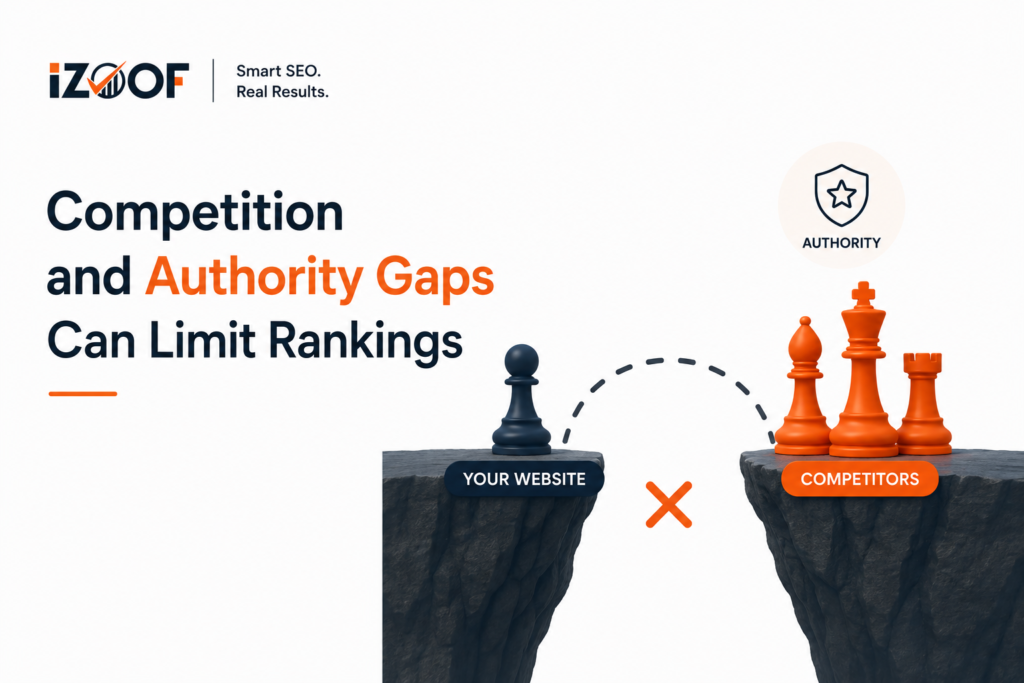
A persistent website not ranking on Google UK can also be caused by stronger competitors already occupying search positions with higher authority and better-optimised content. Search engines tend to prioritise websites that demonstrate trust, relevance, and consistent performance over time.
If competitors have more established backlink profiles, stronger content depth, or better user engagement signals, new or weaker websites may struggle to gain visibility. This is especially common in competitive industries where ranking difficulty is higher. Businesses aiming to improve website ranking UK should focus on building authority gradually through consistent optimisation and content development.
Content Quality and Depth May Be Insufficient
One of the most overlooked reasons for a website not ranking on Google UK is weak or shallow content that fails to provide enough value for users or search engines. Pages that lack depth, clarity, or relevance often struggle to compete against more comprehensive resources.
Search engines prioritise content that fully addresses user intent, answers related questions, and demonstrates expertise. Thin or repetitive content can limit visibility even if the website is technically sound. Improving structure, adding detailed explanations, and covering topics more thoroughly can significantly enhance performance.
Backlink Profile May Be Weak or Unbalanced
Another common factor behind a website not ranking on Google UK is an underdeveloped or low-quality backlink profile. Search engines use backlinks as signals of trust and authority, and websites with limited or irrelevant links often struggle to compete in search results.
If a site has very few referring domains, or if links come from unrelated or low-quality sources, rankings can remain stagnant even with good on-page optimisation. This issue is often part of broader SEO problems UK businesses face when trying to improve organic visibility.
On-Page SEO Signals May Be Weak or Misaligned
A frequent cause of a website not ranking on Google UK is weak on-page optimisation that fails to clearly communicate relevance to search engines. Even well-designed websites can struggle if titles, headings, internal linking, and metadata are not properly structured.
Search engines rely on these signals to understand what each page is about and when it should appear in results. Missing or poorly optimised elements can reduce visibility across multiple keywords. Addressing these gaps is a key part of any strategy focused on improve website ranking UK performance and long-term organic growth.
Website Updates and Content Freshness May Be Lacking
One overlooked reason for a website not ranking on Google UK is outdated or rarely updated content. Search engines tend to favour websites that consistently refresh information, improve relevance, and demonstrate ongoing activity.
If pages remain unchanged for long periods, they may lose competitiveness against more active sites that regularly publish new content or update existing resources. This issue can also contribute to wider SEO problems UK businesses experience when trying to maintain visibility in competitive markets.
Lack of a Clear SEO Strategy
A major underlying cause of a website not ranking on Google UK is the absence of a structured, long-term SEO strategy. Without a defined plan, businesses often apply random improvements without understanding how each action contributes to overall visibility and performance.
A strong strategy aligns technical SEO, content development, keyword targeting, and authority building into a single coordinated approach. It also helps prioritise actions based on impact rather than guesswork. Businesses working to how to fix Google ranking UK challenges usually see better results when all SEO efforts are guided by clear goals and consistent execution.
Final Thoughts
A website not ranking on Google UK is usually the result of multiple overlapping issues rather than a single error. Technical limitations, weak content, indexing problems, lack of authority, and inconsistent optimisation all contribute to reduced visibility in search results. Improving performance requires a structured approach that addresses both technical and strategic SEO elements. Businesses that focus on long-term improvements, continuous optimisation, and user-focused content are more likely to see sustainable ranking growth. Search visibility is built gradually, and consistent execution remains the most reliable path to stronger organic performance.
Frequently Asked Questions
A website not ranking on Google UK is often caused by indexing issues, weak SEO foundations, poor content quality, or lack of authority compared to competitors.
New websites may take time to build authority and trust. Ranking speed depends on competition, content quality, and consistency of optimisation efforts.
Common issues include technical errors, weak backlinks, poor on-page SEO, slow website speed, and content that does not match search intent.
Yes. If pages are not properly indexed, they may not appear in search results even if the content is relevant and high quality.
Improving rankings requires a combination of technical SEO, content optimisation, authority building, and ongoing performance monitoring.
Yes. High-quality backlinks remain an important signal of trust and authority that can influence search visibility.
If issues are technical or ongoing, working with an SEO professional can help identify problems and implement a structured improvement strategy.